 Image 1 of 1
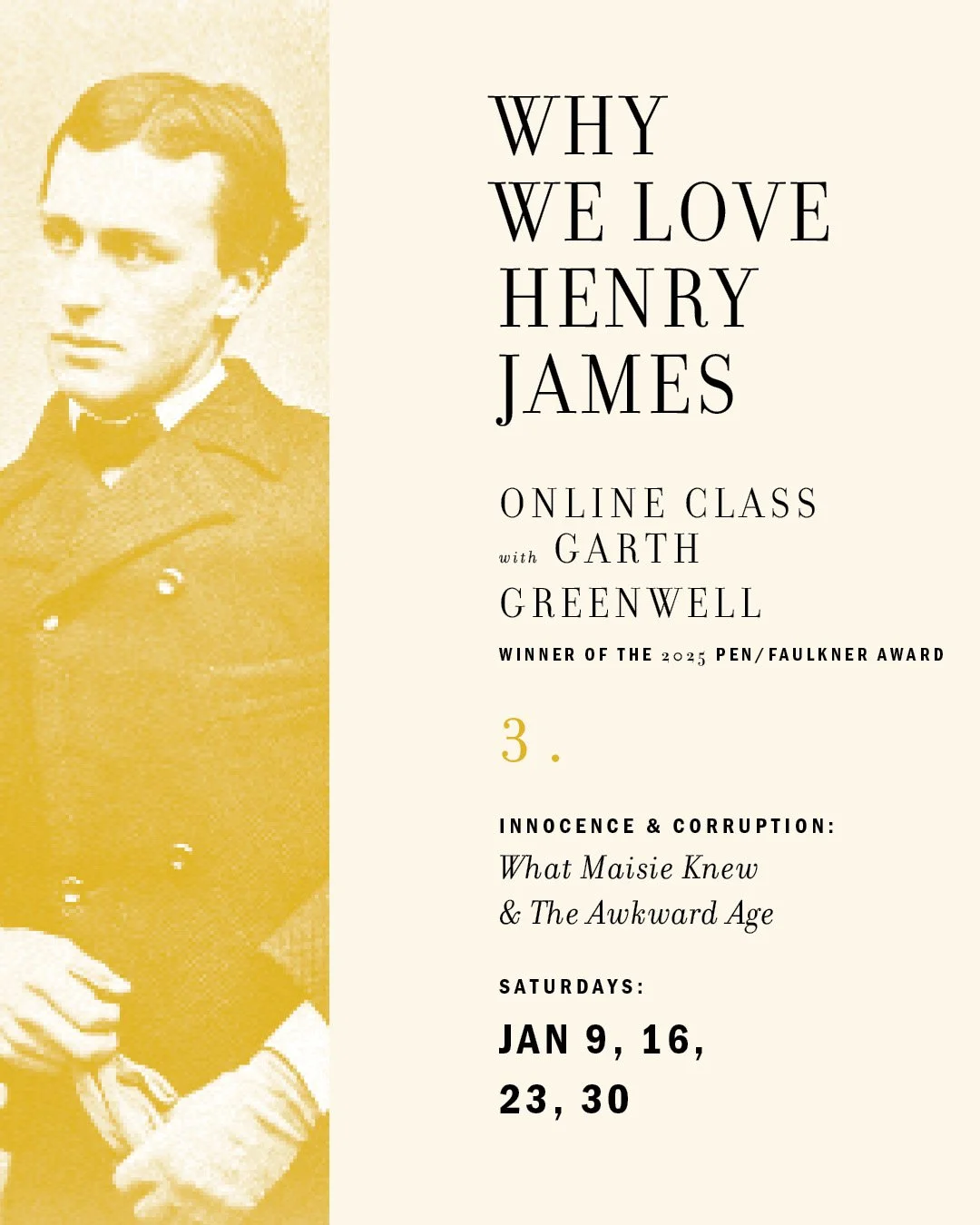
Throughout his career, James was fascinated by children—their intelligence, their sensitivity, their vulnerability—and by the perilous crossing to adulthood. The story of a viciously warring couple as witnessed by their very young daughter, What Maisie Knew (1897) is one of literature’s greatest representations of childhood, as well as an unflinching early novelistic exploration of divorce, still shocking in James’s time. It’s a very moving portrayal of what happens when parents treat their child as a weapon to wield against each other. The Awkward Age (1899) is maybe James’s most experimental novel, written almost entirely in dialogue. The story of 18-year-old Nanda Brookenham, coming of age in a hypocritical, morally corrupt world, this is James’s bitterest and most cynical novel. It’s also incredibly funny and immense fun.
Note: We will be reading the original versions of the novels, not the later New York Edition revised texts. The current Penguin edition of What Maisie Knew, edited by Christopher Ricks, has the text we will use; this seems to be backordered on Bookshop but is available on Amazon. (Note that an earlier Penguin edition, edited by Paul Theroux, uses the later text.) The Penguin edition of The Awkward Age, edited by Ronald Blythe, uses the correct text but may be difficult to find; again, Bookshop is currently backordered but Amazon seems to have copies. Alternatively, you can find the correct edition of both texts in the Library of America volume of Novels 1896-1899.
Schedule: Saturdays, 1:00 – 2:30pm ET
1/9: What Maisie Knew, Chapters 1 – 16
1/16: What Maisie Knew, Chapters 17 – 31 (end)
1/23: The Awkward Age, Books 1 – 5
1/30: The Awkward Age, Books 6 – 10 (end)
Scholarship applications will be open Monday 12/7 to Monday 12/21.
Throughout his career, James was fascinated by children—their intelligence, their sensitivity, their vulnerability—and by the perilous crossing to adulthood. The story of a viciously warring couple as witnessed by their very young daughter, What Maisie Knew (1897) is one of literature’s greatest representations of childhood, as well as an unflinching early novelistic exploration of divorce, still shocking in James’s time. It’s a very moving portrayal of what happens when parents treat their child as a weapon to wield against each other. The Awkward Age (1899) is maybe James’s most experimental novel, written almost entirely in dialogue. The story of 18-year-old Nanda Brookenham, coming of age in a hypocritical, morally corrupt world, this is James’s bitterest and most cynical novel. It’s also incredibly funny and immense fun.
Note: We will be reading the original versions of the novels, not the later New York Edition revised texts. The current Penguin edition of What Maisie Knew, edited by Christopher Ricks, has the text we will use; this seems to be backordered on Bookshop but is available on Amazon. (Note that an earlier Penguin edition, edited by Paul Theroux, uses the later text.) The Penguin edition of The Awkward Age, edited by Ronald Blythe, uses the correct text but may be difficult to find; again, Bookshop is currently backordered but Amazon seems to have copies. Alternatively, you can find the correct edition of both texts in the Library of America volume of Novels 1896-1899.
Schedule: Saturdays, 1:00 – 2:30pm ET
1/9: What Maisie Knew, Chapters 1 – 16
1/16: What Maisie Knew, Chapters 17 – 31 (end)
1/23: The Awkward Age, Books 1 – 5
1/30: The Awkward Age, Books 6 – 10 (end)
Scholarship applications will be open Monday 12/7 to Monday 12/21.