Why We Love
Henry James
Online Class
Starting in September 2026
Saturdays, 1:00-2:30pm ET.
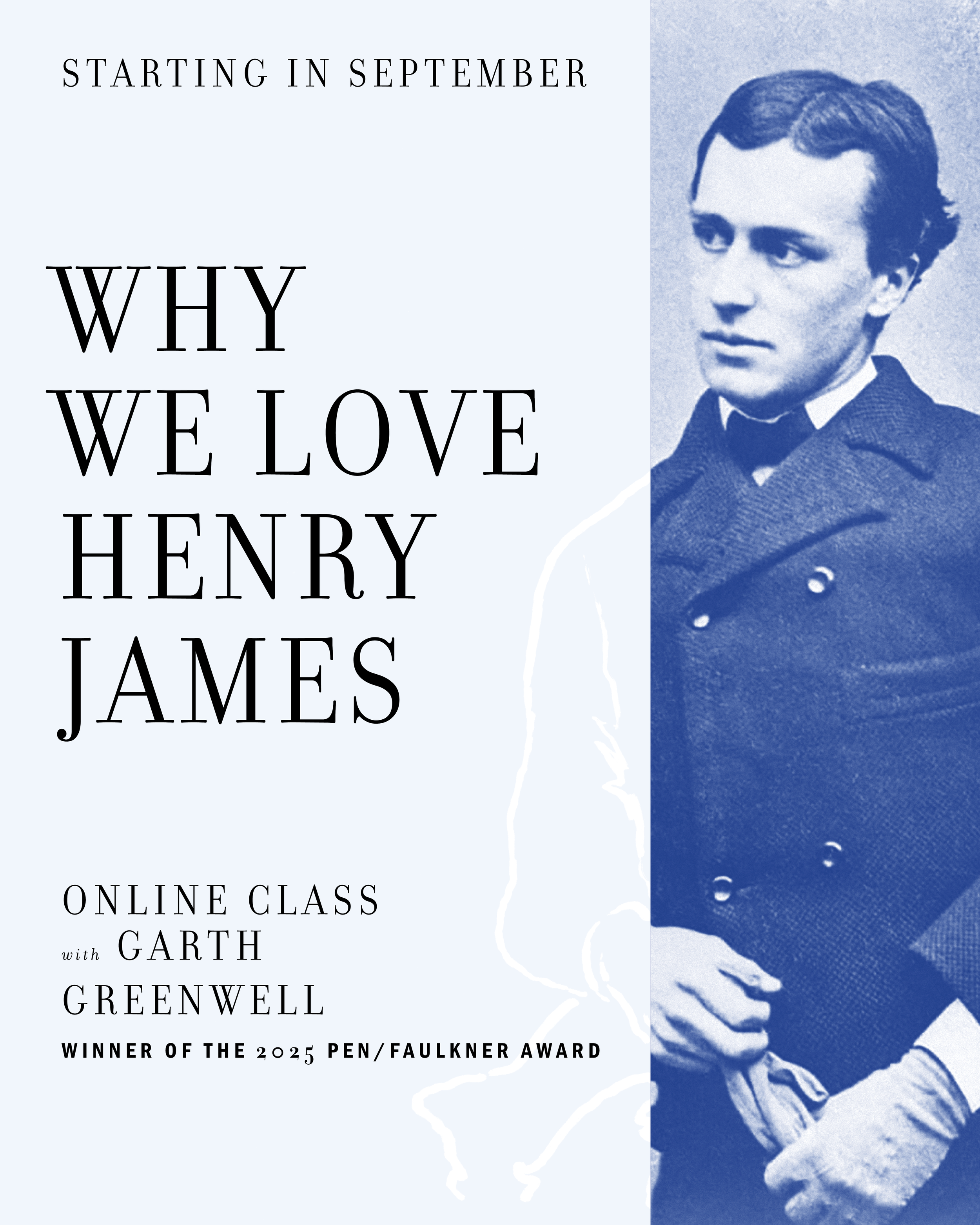
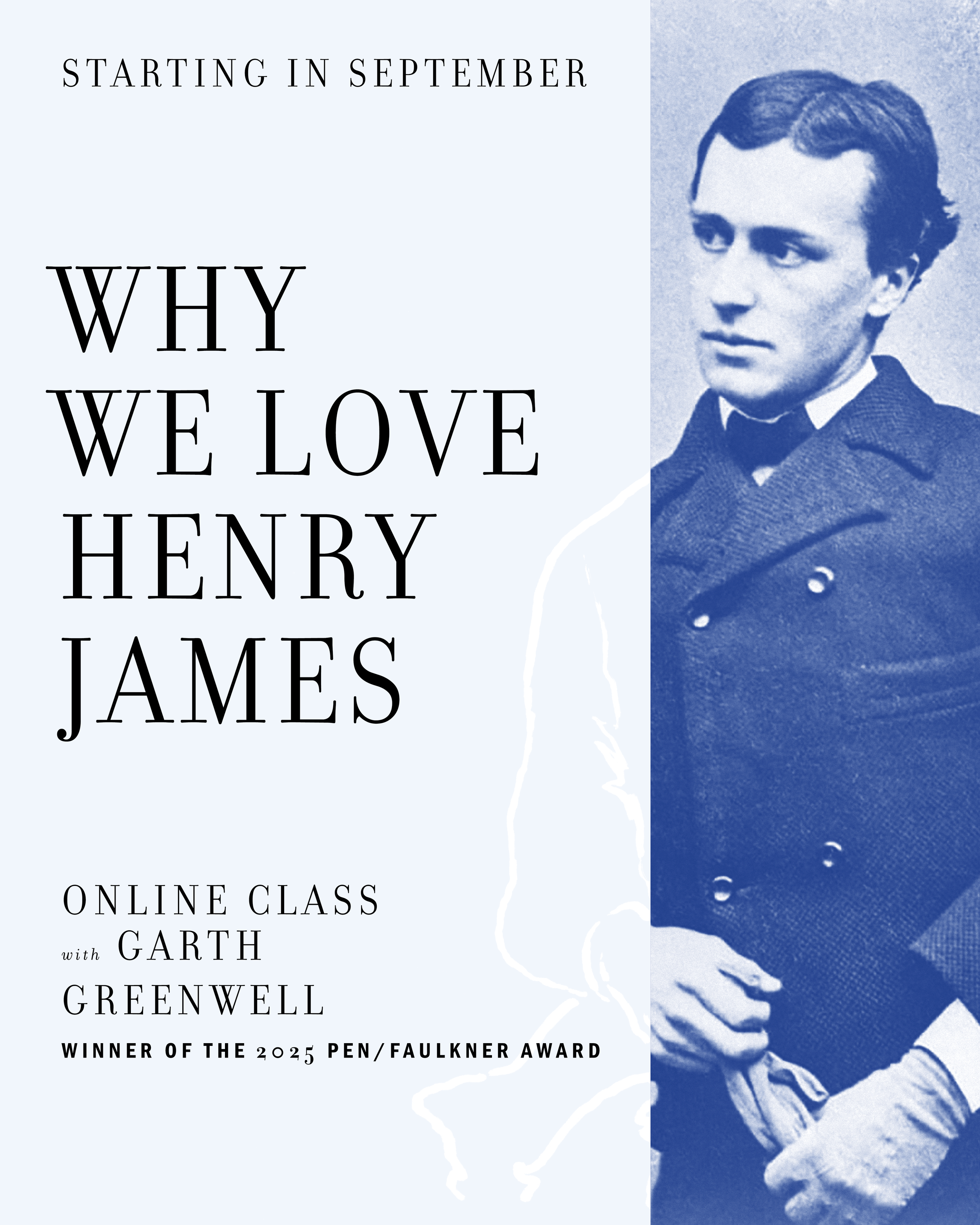
You don’t have to love Henry James to take these classes—James is my favorite fiction writer, I love him enough for all of us—but my hope is that by the end of them you’ll be a convert. Over these six classes, which can be taken individually but are designed as a sequence, we will read, relatively slowly and as carefully as we can, some of the greatest works of fiction in the English language.
James is a crucial bridge between the Victorian novel of George Eliot and the modernism of Virginia Woolf (whom James, who was friends with her parents, knew from her infancy)—and a primary source of the interiority, the focus on consciousness, that is one of the defining traits of the modern. His sentences are adventures, unfolding marvels; and he brings an intricacy and inventiveness to metaphor and imagery unmatched by anybody until Proust.
We will take a writerly approach to reading and discussing these books, paying special attention to craft and style. We’ll also repeatedly ask what it means to engage as writers, in a sustained, intense way, with a great writer of the past—and why such engagement is so crucial a part of an ongoing aesthetic education.
Students who register for all six courses receive a discount (one course is free) and also a one-on-one conference with me before the final course on The Golden Bowl.
_____________________________________________________
Overview
All classes will be recorded for students who can’t attend synchronously. Full and half scholarships are available for individual courses.
Registration for all six courses: $1500
Six courses for the price of five. Includes a 30-minute one-on-one conference with me in June 2027.
You don’t have to love Henry James to take these classes—James is my favorite fiction writer, I love him enough for all of us—but my hope is that by the end of them you’ll be a convert. Over these six classes, which can be taken individually but are designed as a sequence, we will read, relatively slowly and as carefully as we can, some of the greatest works of fiction in the English language.
James is a crucial bridge between the Victorian novel of George Eliot and the modernism of Virginia Woolf (whom James, who was friends with her parents, knew from her infancy)—and a primary source of the interiority, the focus on consciousness, that is one of the defining traits of the modern. His sentences are adventures, unfolding marvels; and he brings an intricacy and inventiveness to metaphor and imagery unmatched by anybody until Proust.
We will take a writerly approach to reading and discussing these books, paying special attention to craft and style. We’ll also repeatedly ask what it means to engage as writers, in a sustained, intense way, with a great writer of the past—and why such engagement is so crucial a part of an ongoing aesthetic education.
Students who register for all six courses receive a discount (one course is free) and also a one-on-one conference with me before the final course on The Golden Bowl.
Class Information
-
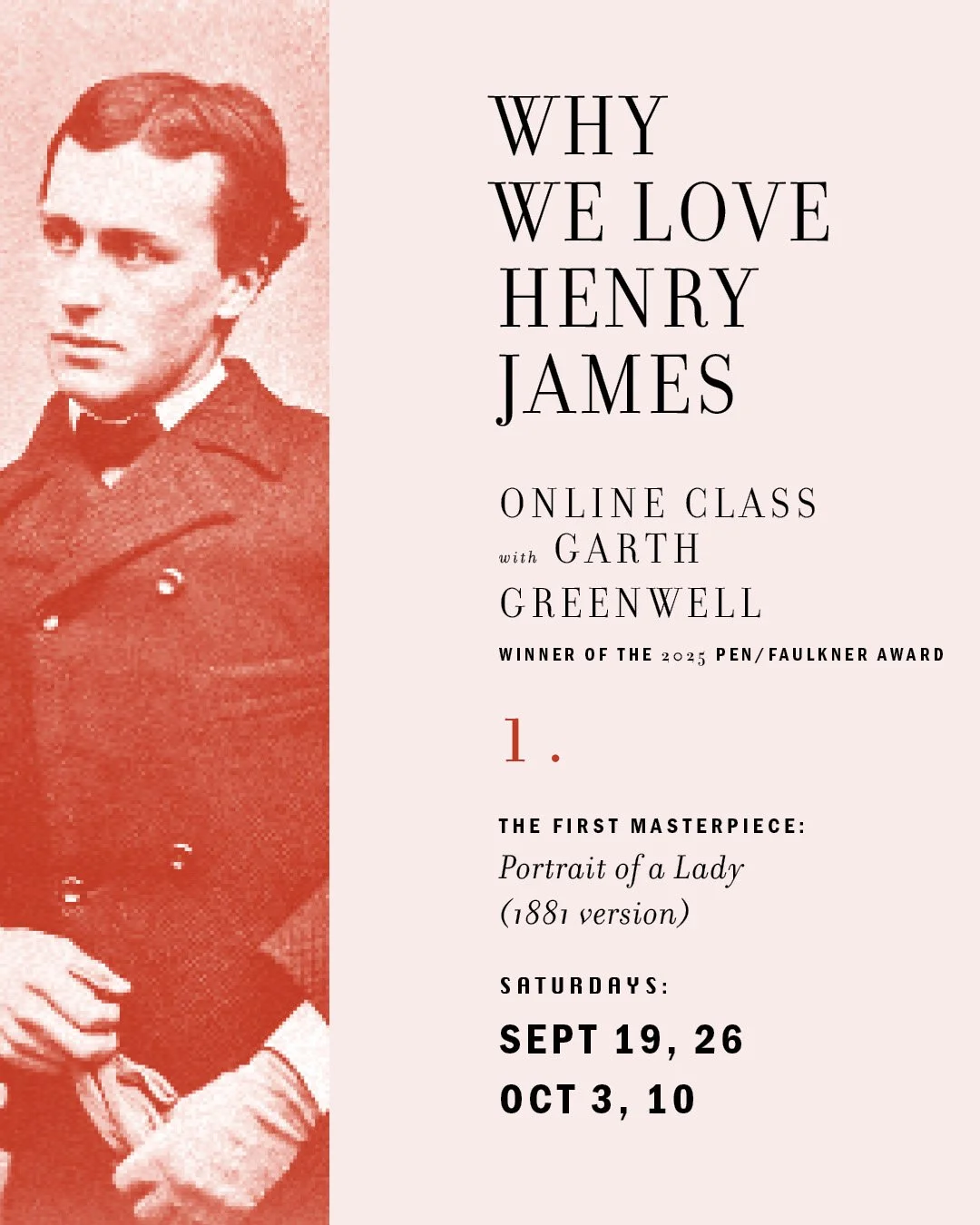
If you read one thing by Henry James, this should be it. After several novels of varying degrees of competence, James, in his late 30s, wrote a book that would become a landmark in literary history. No other novel I know gives so exhilarating a sense of a writer coming into mastery. In Isabel Archer, the novel’s heroine, James writes one of the great characters in literature, a young woman, determined to take the reins of her own existence, who makes a devastatingly wrong choice—and then bravely faces the consequences. It’s also in this novel—in its famous Chapter 42, written a few years before Henry’s brother, William James, coined the term “stream of consciousness”—that James invents a brilliant new approach to the representation of consciousness in fiction.
Note: We will be reading the original, 1881 edition of Portrait, not the heavily revised New York Edition published at the end of James’s life. Please be sure to get the right text, which is the version used in the Penguin edition.
Schedule: Saturdays, 1:00 – 2:30pm ET
9/19: Chapter 1 – Chapter 17
9/26: Chapter 18 – Chapter 30
10/3: Chapter 31 – Chapter 42
10/10: Chapter 43 – Chapter 55 (end)Application for full and half scholarships available here. Applications will close on September.
-
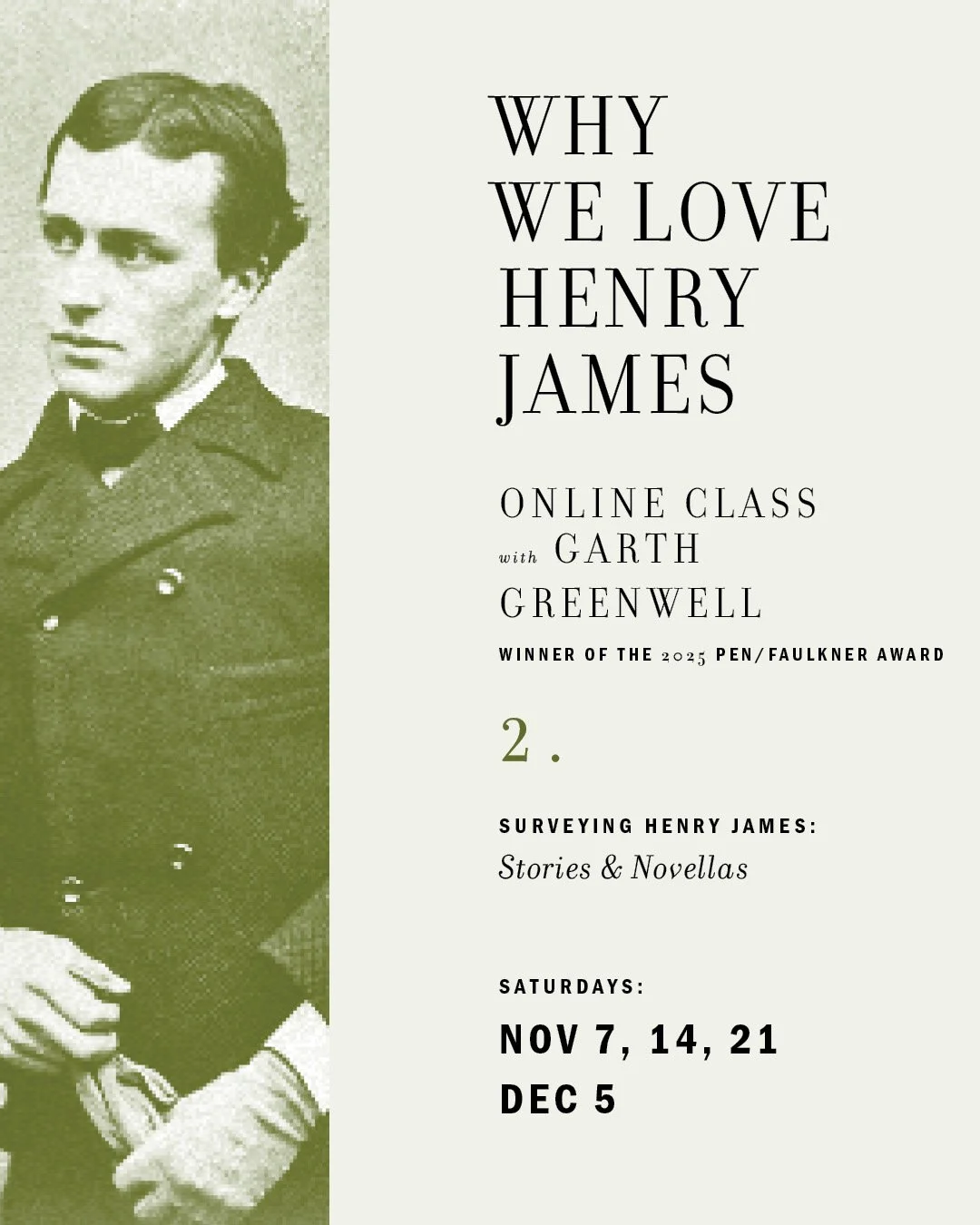
James was a great writer of stories and novellas, and in this class we’ll survey his career using some of his finest shorter texts, taking in both his major themes and his extraordinary stylistic evolution. We’ll begin with his first success, the novella Daisy Miller, one of his first elaborations of the “international theme,” with its collisions between American innocence and European guile. We’ll then read two great stories about the challenges and uncertainties of the artist’s vocation before tackling his classic ghost story, Turn of the Screw, one of the great investigations of corruption of innocence and the question of evil.We’ll end with two stories from James’s magisterial late style, profound explorations of one of James’s most persistent themes: regret over the unlived life.
Note: Please get the 1878 version of Daisy Miller, not the 1908 revision. The text linked below is the one I will be using. For Turn of the Screw, we will be reading the 1908 revised text, which is generally preferred to the earlier version (and, as the original was already written in James’s “late style,” the changes are not major). We will provide PDFs of the short stories.
Schedule: Saturdays, 1:00 – 2:30pm ET
11/7: Daisy Miller(1878 version)
11/14: “The Lesson of the Master” and “The Middle Years”
11/21: The Turn of the Screw
(No class 11/28: Thanksgiving)
12/5: “The Beast in the Jungle” & “The Jolly Corner”Scholarship applications will be open Monday, October 5 to Monday, October 26.
-
Throughout his career, James was fascinated by children—their intelligence, their sensitivity, their vulnerability—and by the perilous crossing to adulthood. The story of a viciously warring couple as witnessed by their very young daughter, What Maisie Knew (1897) is one of literature’s greatest representations of childhood, as well as an unflinching early novelistic exploration of divorce, still shocking in James’s time. It’s a very moving portrayal of what happens when parents treat their child as a weapon to wield against each other. The Awkward Age (1899) is maybe James’s most experimental novel, written almost entirely in dialogue. The story of 18-year-old Nanda Brookenham, coming of age in a hypocritical, morally corrupt world, this is James’s bitterest and most cynical novel. It’s also incredibly funny and immense fun.
Note: We will be reading the original versions of the novels, not the later New York Edition revised texts. The current Penguin edition of What Maisie Knew, edited by Christopher Ricks, has the text we will use; this seems to be backordered on Bookshop but is available on Amazon. (Note that an earlier Penguin edition, edited by Paul Theroux, uses the later text.) The Penguin edition of The Awkward Age, edited by Ronald Blythe, uses the correct text but may be difficult to find; again, Bookshop is currently backordered but Amazon seems to have copies. Alternatively, you can find the correct edition of both texts in the Library of America volume of Novels 1896-1899.
Schedule: Saturdays, 1:00 – 2:30pm ET
1/9: What Maisie Knew, Chapters 1 – 16
1/16: What Maisie Knew, Chapters 17 – 31 (end)
1/23: The Awkward Age, Books 1 – 5
1/30: The Awkward Age, Books 6 – 10 (end)Scholarship applications will be open Monday 12/7 to Monday 12/21.
-
James Baldwin’s favorite novel (and also James’s favorite among his works), The Ambassadors features James’s most lovable and profound hero, Lambert Strether. His mission is simple: he has been sent from New England by the grand, righteous Mrs. Newsome to collect her son, who has fallen into the clutches of a devious European woman. Arriving in Paris, though, Strether finds himself questioning all his certainties about life and how it should be lived. One of James’s most delightful, mysterious, moving novels. While I’m reading it, I feel sure that it’s my favorite novel, too. I will be using the Penguin edition, which I encourage you to get; but differences between editions are fairly minor in the late novels, and any edition will be fine.
Schedule: Saturdays, 1:00 – 2:30pm ET
3/6: Books 1 – 3
3/13: Books 4 – 6
3/20: Books 7 – 9
3/27: Books 10 – 12Scholarship applications will be open Monday, February 1 to Monday, February 15.
-
There’s a certain received idea of James as a Victorian prude, unable to write about the passions of the body. Wings of the Dove, one of the most passionate novels in the canon, shows what a ridiculous caricature that is. It is also one of James’s most sophisticated and profound moral investigations. Two impoverished lovers, unable to wed, embroil themselves with a young woman who is fabulously wealthy and doomed by illness. This is a novel without villains in which profound wrongs are committed—a novel in which, in a world where traditional guiding values have been eroded, people still try to find ways, sometimes tragically mistaken, to love and be decent to one another. Note: I will be using the Penguin edition (ISBN: 9780141441283), which is backordered on Bookshop but available on Amazon and other sites. But differences between editions are fairly minor in the late novels, so any edition will be fine.
Schedule: Saturdays, 1:00 – 2:30pm ET
5/1: Books 1 – 3
5/8: Books 4 – 5
5/15: Books 6 – 8
5/22: Books 9 – 10 (end)Scholarship applications will be open Monday, March 29 to Monday, April 12.
-
To end our journey together with James, we will read his last novel, which is also (so far as I’m concerned) the greatest novel anyone has ever written. The Golden Bowl is often thought of as an intimidating novel, one of those Big Difficult Books we sometimes feel a little scared of. It does have its difficulties—necessary ones, morally and philosophically profound; but also it’s as delicious, as outrageous, as fun, as any telenovela. It’s a book about adultery and neglected spouses and queasily close fathers and daughters. It’s also the profoundest book about marriage I know—and about what happens if, after a grievous wrong has been done in a marriage, you stay in it, and fight to preserve the dignity of everyone involved. It’s impossibly beautiful, a miraculous book about ruthlessness, forgiveness, and love. Note: I will be using the Penguin edition (ISBN: 9780141441276), which is backordered on Bookshop but available on Amazon and other sites. But any edition should be fine.
Schedule: Saturdays, 1:00 – 2:30pm ET
7/10: Book 1 – Book 2, Chapter 4
7/17: Book 2, Chapter 5 – Book 3
7/24: Book 4
7/31: Book 5 – Book 6 (end)Scholarship applications will be open Monday, 5/31 to Monday, June 14.
If you read one thing by Henry James, this should be it. After several novels of varying degrees of competence, James, in his late 30s, wrote a book that would become a landmark in literary history. No other novel I know gives so exhilarating a sense of a writer coming into mastery. In Isabel Archer, the novel’s heroine, James writes one of the great characters in literature, a young woman, determined to take the reins of her own existence, who makes a devastatingly wrong choice—and then bravely faces the consequences. It’s also in this novel—in its famous Chapter 42, written a few years before Henry’s brother, William James, coined the term “stream of consciousness”—that James invents a brilliant new approach to the representation of consciousness in fiction.
Note: We will be reading the original, 1881 edition of Portrait, not the heavily revised New York Edition published at the end of James’s life. Please be sure to get the right text, which is the version used in the Penguin edition.
Schedule: Saturdays, 1:00 – 2:30pm ET
9/19: Chapter 1 – Chapter 17
9/26: Chapter 18 – Chapter 30
10/3: Chapter 31 – Chapter 42
10/10: Chapter 43 – Chapter 55 (end)
Application for full and half scholarships available here. Applications will close on September 1.
Individual Classes
James was a great writer of stories and novellas, and in this class we’ll survey his career using some of his finest shorter texts, taking in both his major themes and his extraordinary stylistic evolution. We’ll begin with his first success, the novella Daisy Miller, one of his first elaborations of the “international theme,” with its collisions between American innocence and European guile. We’ll then read two great stories about the challenges and uncertainties of the artist’s vocation before tackling his classic ghost story, Turn of the Screw, one of the great investigations of corruption of innocence and the question of evil. We’ll end with two stories from James’s magisterial late style, profound explorations of one of James’s most persistent themes: regret over the unlived life.
Note: Please get the 1878 version of Daisy Miller, not the 1908 revision. The text linked below is the one I will be using. For Turn of the Screw, we will be reading the 1908 revised text, which is generally preferred to the earlier version (and, as the original was already written in James’s “late style,” the changes are not major). We will provide PDFs of the short stories.
Schedule: Saturdays, 1:00 – 2:30pm ET
11/7: Daisy Miller (1878 version)
11/14: “The Lesson of the Master” and “The Middle Years”
11/21: The Turn of the Screw
(No class 11/28: Thanksgiving)
12/5: “The Beast in the Jungle” & “The Jolly Corner”
Scholarship applications will be open Monday, October 5 to Monday, October 26.
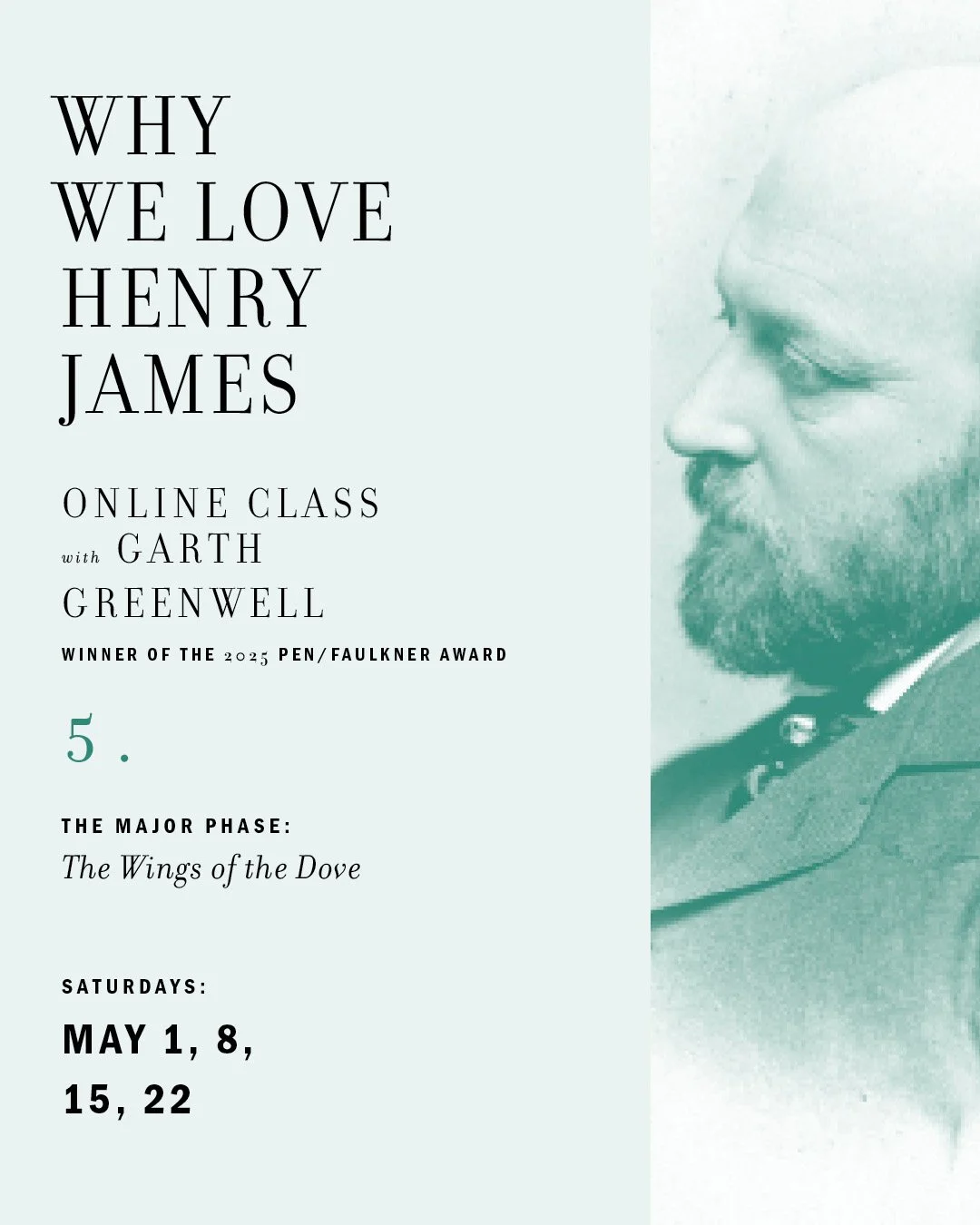
There’s a certain received idea of James as a Victorian prude, unable to write about the passions of the body. Wings of the Dove, one of the most passionate novels in the canon, shows what a ridiculous caricature that is. It is also one of James’s most sophisticated and profound moral investigations. Two impoverished lovers, unable to wed, embroil themselves with a young woman who is fabulously wealthy and doomed by illness. This is a novel without villains in which profound wrongs are committed—a novel in which, in a world where traditional guiding values have been eroded, people still try to find ways, sometimes tragically mistaken, to love and be decent to one another. Note: I will be using the Penguin edition (ISBN: 9780141441283), which is backordered on Bookshop but available on Amazon and other sites. But differences between editions are fairly minor in the late novels, so any edition will be fine.
Schedule: Saturdays, 1:00 – 2:30pm ET
5/1: Books 1 – 3
5/8: Books 4 – 5
5/15: Books 6 – 8
5/22: Books 9 – 10 (end)
Scholarship applications will be open Monday, March 29 to Monday, April 12.
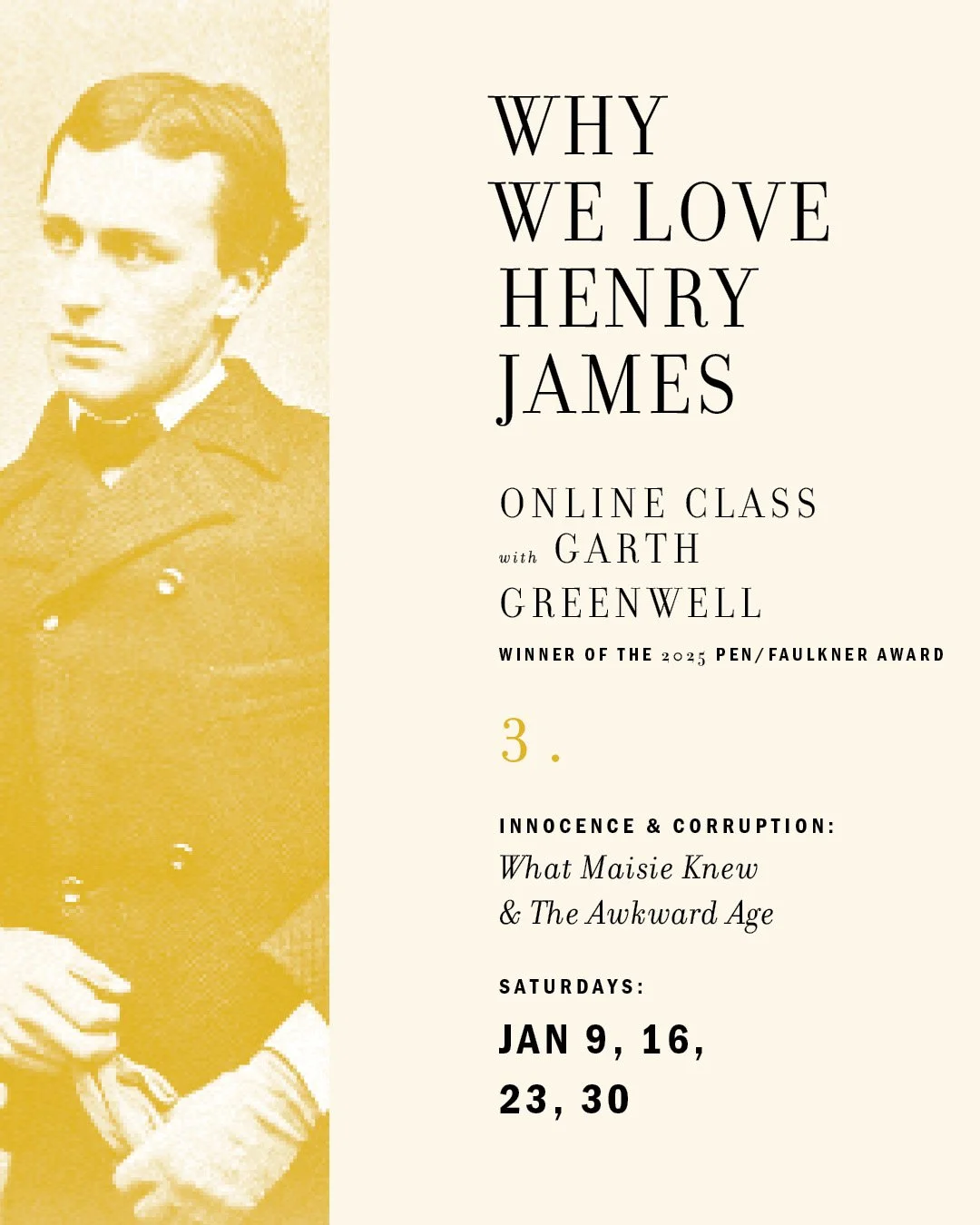
Throughout his career, James was fascinated by children—their intelligence, their sensitivity, their vulnerability—and by the perilous crossing to adulthood. The story of a viciously warring couple as witnessed by their very young daughter, What Maisie Knew (1897) is one of literature’s greatest representations of childhood, as well as an unflinching early novelistic exploration of divorce, still shocking in James’s time. It’s a very moving portrayal of what happens when parents treat their child as a weapon to wield against each other. The Awkward Age (1899) is maybe James’s most experimental novel, written almost entirely in dialogue. The story of 18-year-old Nanda Brookenham, coming of age in a hypocritical, morally corrupt world, this is James’s bitterest and most cynical novel. It’s also incredibly funny and immense fun.
Note: We will be reading the original versions of the novels, not the later New York Edition revised texts. The current Penguin edition of What Maisie Knew, edited by Christopher Ricks, has the text we will use; this seems to be backordered on Bookshop but is available on Amazon. (Note that an earlier Penguin edition, edited by Paul Theroux, uses the later text.) The Penguin edition of The Awkward Age, edited by Ronald Blythe, uses the correct text but may be difficult to find; again, Bookshop is currently backordered but Amazon seems to have copies. Alternatively, you can find the correct edition of both texts in the Library of America volume of Novels 1896-1899.
Schedule: Saturdays, 1:00 – 2:30pm ET
1/9: What Maisie Knew, Chapters 1 – 16
1/16: What Maisie Knew, Chapters 17 – 31 (end)
1/23: The Awkward Age, Books 1 – 5
1/30: The Awkward Age, Books 6 – 10 (end)
Scholarship applications will be open Monday 12/7 to Monday 12/21.
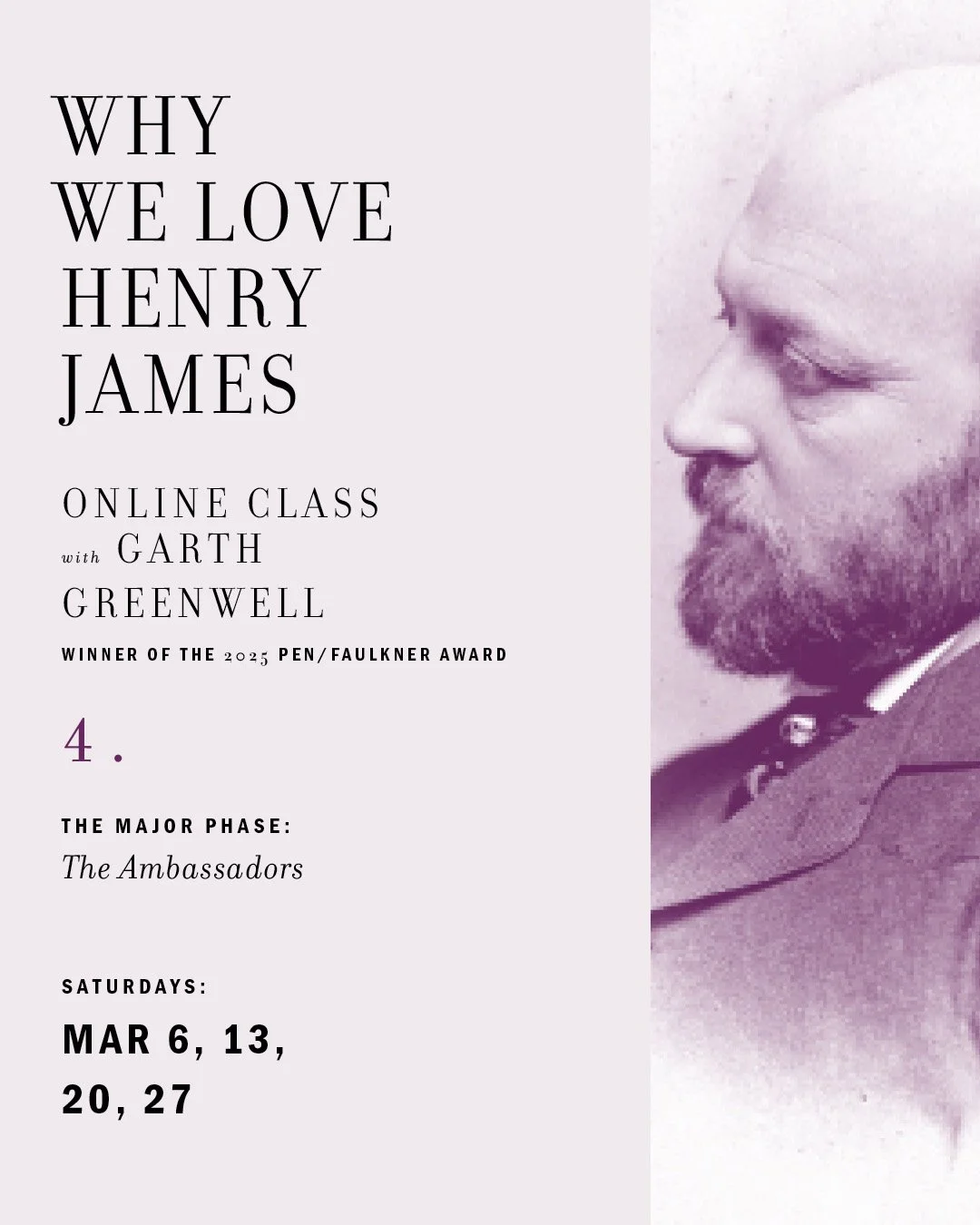
James Baldwin’s favorite novel (and also James’s favorite among his works), The Ambassadors features James’s most lovable and profound hero, Lambert Strether. His mission is simple: he has been sent from New England by the grand, righteous Mrs. Newsome to collect her son, who has fallen into the clutches of a devious European woman. Arriving in Paris, though, Strether finds himself questioning all his certainties about life and how it should be lived. One of James’s most delightful, mysterious, moving novels. While I’m reading it, I feel sure that it’s my favorite novel, too. I will be using the Penguin edition, which I encourage you to get; but differences between editions are fairly minor in the late novels, and any edition will be fine.
Schedule: Saturdays, 1:00 – 2:30pm ET
3/6: Books 1 – 3
3/13: Books 4 – 6
3/20: Books 7 – 9
3/27: Books 10 – 12
Scholarship applications will be open Monday, February 1 to Monday, February 15.
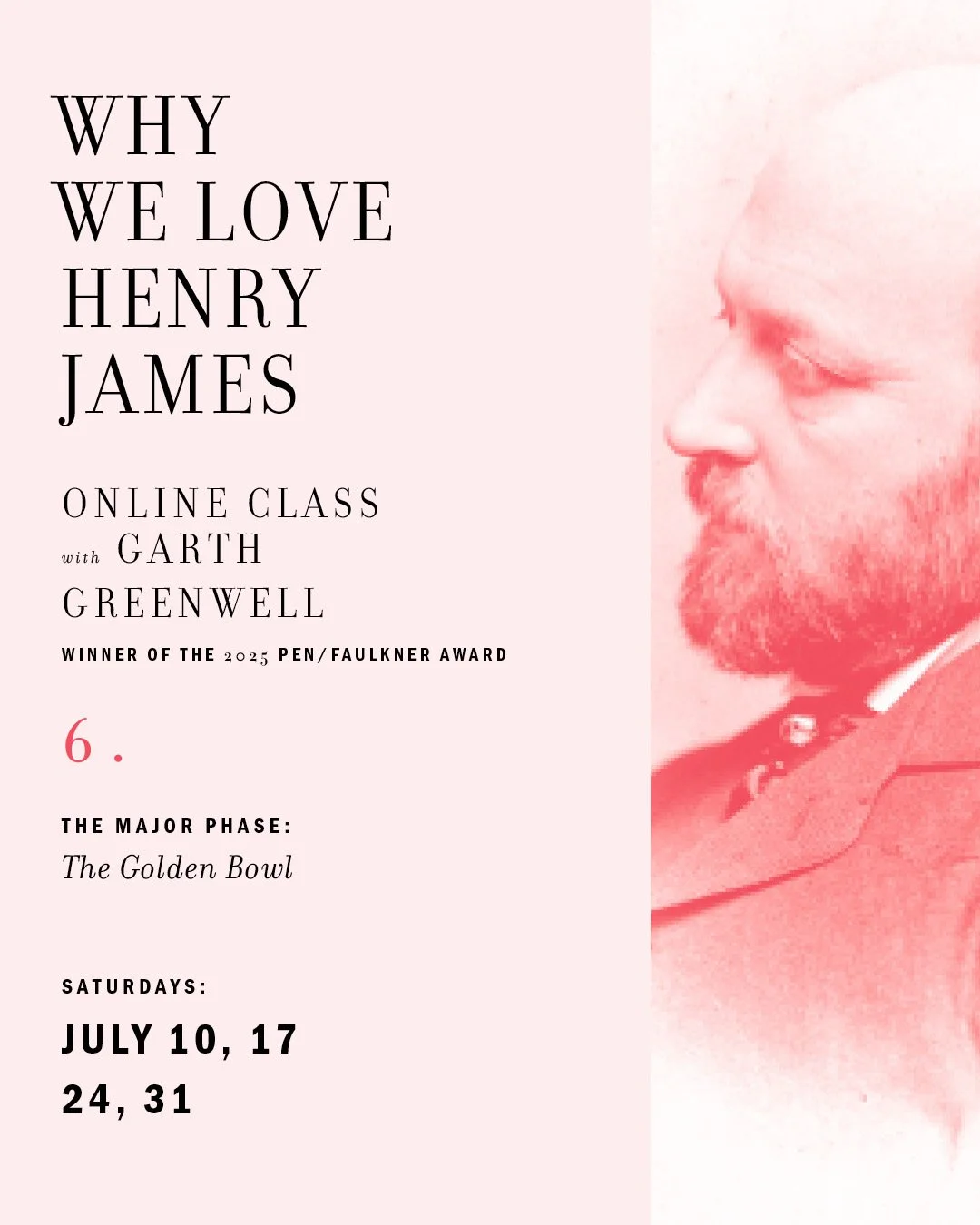
To end our journey together with James, we will read his last novel, which is also (so far as I’m concerned) the greatest novel anyone has ever written. The Golden Bowl is often thought of as an intimidating novel, one of those Big Difficult Books we sometimes feel a little scared of. It does have its difficulties—necessary ones, morally and philosophically profound; but also it’s as delicious, as outrageous, as fun, as any telenovela. It’s a book about adultery and neglected spouses and queasily close fathers and daughters. It’s also the profoundest book about marriage I know—and about what happens if, after a grievous wrong has been done in a marriage, you stay in it, and fight to preserve the dignity of everyone involved. It’s impossibly beautiful, a miraculous book about ruthlessness, forgiveness, and love. Note: I will be using the Penguin edition (ISBN: 9780141441276), which is backordered on Bookshop but available on Amazon and other sites. But any edition should be fine.
Schedule: Saturdays, 1:00 – 2:30pm ET
7/10: Book 1 – Book 2, Chapter 4
7/17: Book 2, Chapter 5 – Book 3
7/24: Book 4
7/31: Book 5 – Book 6 (end)
Scholarship applications will be open Monday, 5/31 to Monday, June 14.
Questions?
Reach us at greenwellassistant@gmail.com, or through this contact form.